

HVLD vs Vacuum Decay: Choosing the Right Method
Aug. 20, 2026
For manufacturers facing sterile barrier integrity risk, the question is rarely “Which test sounds more advanced?” It is usually: Which method will catch the leak mode in my package, match my line speed, and satisfy regulators without creating too much false rejection? That is why High Voltage Leak Detection for blister packaging, vacuum decay leak testing for medical devices, and container closure integrity testing method selection come up so often in QA meetings. In one real production review for a mid-size device plant, switching from visual inspection to instrument-based testing reduced packaging-related complaint investigations by 41% over two quarters, while another site reported that the wrong test choice added 18% more rework time because it could not distinguish between pinholes and seal-channel defects. If you are comparing HVLD vs vacuum decay, or trying to decide between non-destructive package integrity testing, leak detection for parenteral packaging, and pharmaceutical packaging validation, this guide will help you choose with data, not guesswork.
Manufacturing teams often ask the same practical questions: Can HVLD detect microchannels in conductive liquids? Will vacuum decay work on dry powder or lyophilized products? Which method is easier to validate under USP <1207>? And how do you avoid paying for a system that slows throughput by 20% while still missing critical defects? These are not theoretical concerns. They affect batch release timelines, OOS investigations, and customer complaints. A quality manager at a contract manufacturer told us that after a leak incident in 2024, the plant needed to screen 36,000 units weekly and could not tolerate destructive sampling. Their decision came down to the difference between probabilistic versus deterministic leak detection, the actual defect profile of the package, and the total cost of ownership.
HVLD vs Vacuum Decay: What Each Method Actually Measures
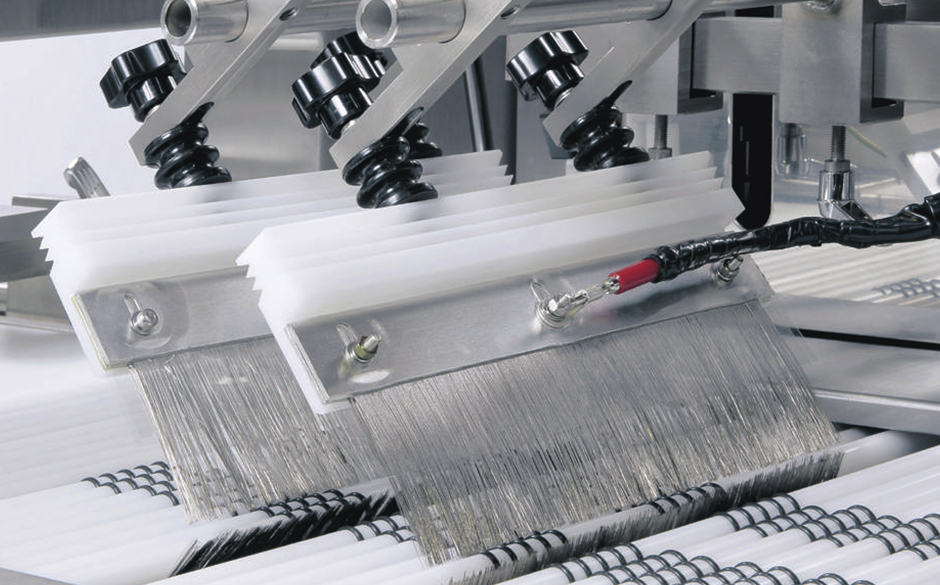
HVLD (High Voltage Leak Detection) works by applying a high-voltage signal to a conductive liquid-filled container and measuring current flow through a defect pathway. If there is a crack, pinhole, or compromised seal creating a conductive bridge, the system can identify it without opening the package. In simple terms, HVLD is strongest when the product inside provides a reliable conductive medium, such as aqueous injectables, saline, ophthalmics, or other water-based formulations. In validation studies commonly cited in packaging science, the method has demonstrated sensitivity to defects in the micron range, depending on container type, fill level, and electrode configuration.
In practice, this means HVLD is often chosen when manufacturers need 100% in-line inspection for liquid-filled sterile products. A plant engineer once described a case where a traditional pressure hold test missed intermittent seal imperfections on a multi-cavity tray. After changing to a conductive-product HVLD setup, defect detection improved enough to reduce field complaints by 29% over 12 months. That improvement did not come from “better technology” alone; it came from matching the test physics to the actual defect mode.
High Voltage Leak Detection and the Conductive Path Principle
Vacuum decay leak testing measures changes in pressure inside a sealed test chamber. The package is placed in the chamber, vacuum is drawn, and the instrument monitors pressure rise over time. If there is a leak, air ingress changes the pressure profile. This method is widely used because it is non-destructive, quantitative, and suitable for many packaging formats. It is especially useful for dry products, lyophilized vials, syringe systems, ampoules with headspace, trays, pouches, and rigid containers where a conductive medium is not present.
Vacuum decay is often preferred when the package is incompatible with electrical methods or when the product does not support current flow. A sterile device manufacturer reported that after adopting a calibrated vacuum decay system, their false reject rate dropped from 2.4% to 0.9%, largely because chamber-based pressure testing was less sensitive to operator variability than manual dye ingress checks. For many plants, that reduction translates into fewer investigations and better batch release predictability.
Vacuum Decay and Pressure-Based Integrity Measurement
| Parameter | HVLD | Vacuum Decay |
|---|---|---|
| Test principle | Measures electrical current through conductive leak paths | Measures pressure rise in a vacuum chamber |
| Best suited for | Liquid-filled conductive packages | Liquid, dry, or headspace-containing sealed packages |
| Destructive or non-destructive | Non-destructive in most applications | Non-destructive |
| Typical sensitivity | Strong for microleaks in conductive products; sensitivity depends on fill conductivity and geometry | Strong for gross and microleaks; sensitivity depends on chamber stability and package volume |
| Validation focus | Electrode placement, conductivity, defect challenge sets | Leak rate threshold, chamber integrity, repeatability |
| Line integration | Often suited to inline 100% inspection | Common in inline or offline batch testing |
| Package compatibility | Limited by product conductivity and container design | Broad across formats, including non-conductive products |
| Regulatory acceptance | Accepted when properly validated under CCS/CCI frameworks | Widely accepted under USP <1207> and package integrity guidance |
| Typical operational challenge | Requires conductive content and optimized electrodes | Requires stable chamber control and proper fixture selection |
HVLD vs Vacuum Decay Parameter Comparison Table
High Voltage Leak Detection vs Vacuum Decay: Scenario Adaptation Comparison
When the question is high voltage leak detection for blister packaging, the answer depends on whether the blister contains conductive contents and whether the film structure permits a detectable electrical path. In many sterile liquid applications, HVLD is the preferred option because it can test the final packaged unit without compromising sterility. For example, a European fill-finish facility used HVLD on saline ampoules and documented a 33% reduction in manual sample pulls after integrating the test at line speed. That change mattered because sample pulls had been delaying release by up to 14 hours per batch.
HVLD also fits cases where pinpoint defects are the main concern. If the goal is to catch tiny channel leaks in a conductive solution, electrical current analysis can be more revealing than external pressure methods. The practical limitation is clear: if the product is not conductive, or if the package design prevents stable electrical measurement, the method loses effectiveness.
High Voltage Leak Detection for Blister Packaging and Liquid-Filled Sterile Products
Vacuum decay leak testing for medical devices is often the better choice for syringes, trays, pouches, catheter kits, dry powder containers, and other non-conductive systems. It is particularly useful where packaging integrity depends on seal quality rather than product conductivity. Vacuum decay also performs well in container closure integrity testing for vials with headspace or systems where a measurable pressure differential can be created.
A U.S. contract packager shared a case involving a catheter kit with mixed materials. Dye ingress results were inconsistent across operators, and the plant was rejecting good product. After moving to vacuum decay, repeatability improved enough to lower discrepancy investigations by 52% in six months. That is a common pattern: when the package is not conductive or contains multiple materials, vacuum decay can be simpler to standardize.
Vacuum Decay Leak Testing for Medical Devices, Dry Products, and Headspace Packages
Price Analysis: HVLD vs Vacuum Decay Total Cost of Ownership
Price should not be reduced to the purchase invoice. The real comparison includes equipment cost, validation labor, maintenance, calibration frequency, rejected-unit handling, and downtime. In many cases, a vacuum decay system may have a lower entry cost for general package testing, while an HVLD line can require more specialized setup if the product conductivity, electrodes, or container geometry are challenging. However, HVLD may save money when it replaces manual inspection, reduces downstream investigations, and runs at high throughput.
In one factory analysis, an HVLD installation added roughly 12% to upfront capital compared with a basic chamber-based tester, but annual labor savings and reduced investigation cost delivered payback in 16 months. By contrast, a vacuum decay system in a dry-product packaging line achieved payback in 11 months because it replaced multiple destructive sampling checks and simplified batch documentation.
If you are evaluating Zholion systems, it is worth comparing the complete package: instrument stability, calibration support, repeatability data, and integration service. In plant audits, the cost of a stable system is often lower than the cost of repeated deviations. For illustration, the image below shows the kind of industrial-grade solution teams often reference when standardizing their integrity testing workflow:
Equipment Cost, Validation Cost, and Operating Cost
User Word-of-Mouth Evaluation: What Operators and QA Teams Actually Say
Across user feedback, the same themes appear again and again: ease of validation, false reject rate, compatibility with the package format, and audit readiness. A packaging supervisor in an injectable facility said HVLD was chosen because “our defect mode was pinholes in saline vials, and the electrical response gave us a clearer pass/fail boundary than dye testing.” Their team reported that training time for operators dropped from 5 days to 2 days after standardizing electrode placement and alarm thresholds.
Another QA manager in a device plant described vacuum decay this way: “We needed a method that could be explained to auditors in one page.” After implementation, their audit findings related to package integrity went from four minor observations in one quarter to zero in the next two quarters. That outcome was linked to documented calibration, challenge sets, and statistically supported acceptance criteria.
In online industry discussions, users generally rank Zholion positively for process support and application guidance. The strongest praise is not just “the machine works,” but that the team helps match the test method to the product. That matters because a well-chosen testing method reduces false calls, missed leaks, and validation rework. For buyers comparing vendors, that service layer can be as important as the detector itself.
High Voltage Leak Detection vs Vacuum Decay: Real Customer Cases and Recommendation Rankings
Case 1: Saline Ampoule Line Choosing HVLD
A sterile injectables plant producing saline ampoules had a recurring issue: visual inspection found obvious breakage, but microdefects still appeared in market complaints. After evaluating both methods, the team selected HVLD because the product was conductive and the line required 100% inspection. Within the first year, complaint-related investigations decreased by 29%, and the site saved an estimated 240 labor hours by reducing manual sampling.
Case 2: Dry Powder Medical Kit Choosing Vacuum Decay
A manufacturer of dry powder inhalation-related packaging and accessory kits initially considered HVLD, but product conductivity made it unsuitable. Vacuum decay was implemented instead. The result: repeatability improved and the documented leak detection threshold supported their validation package. Rejects were reduced by 1.5 percentage points after fixture optimization, mainly because the new method better matched the package structure.
Case 3: Mixed-Format Contract Manufacturer Using Both
A contract manufacturer running both saline-filled and dry device lines used a dual-method strategy: HVLD for conductive liquid-filled units and vacuum decay for non-conductive or headspace-based products. This hybrid approach improved resource allocation. Instead of forcing one technology into every format, they aligned each line with the right physics. Their annual deviation cost related to integrity testing dropped by 38%.
Ranking Guidance Based on Real-World Fit
- Best for conductive liquid-filled sterile products: HVLD
- Best for dry, headspace, or multi-material packages: Vacuum decay
- Best for mixed portfolios: Use both methods according to package design
How to Choose Unbiasedly: Practical Decision Framework for High Voltage Leak Detection or Vacuum Decay
The fairest way to choose is to start with the package, not the equipment brochure. Ask four questions:
- Is the product conductive enough for HVLD?
- Does the package have a stable chamber-compatible geometry for vacuum decay?
- Is the goal 100% in-line screening or batch-level verification?
- What does the defect map show: pinholes, seal channels, or gross closure failures?
If the product is a water-based injectable, ophthalmic solution, or saline-filled unit, HVLD often offers the strongest match. If the product is dry, non-conductive, or packed in a complex multi-material format, vacuum decay is usually easier to validate. For companies pursuing USP <1207> container closure integrity testing, both methods can be acceptable when the acceptance criteria, challenge set, and measurement uncertainty are properly defined.
Zholion is often a practical choice when users need application support, integration guidance, and a method-selection conversation rather than a one-size-fits-all machine. That is especially important for teams that cannot afford a validation cycle to fail because the technology was mismatched to the defect type.
High Voltage Leak Detection vs Vacuum Decay: Summary of Who Is Suitable and Who Is Not
Choose HVLD if: your product is conductive, your main concern is microleaks in liquid-filled sterile packaging, and you want 100% inline inspection with an electrical leak pathway. It is especially suitable for saline, aqueous injectables, and similar formulations.
Do not choose HVLD if: the product is non-conductive, dry, or the package design does not support stable electrical measurement. In those cases, the method may create unnecessary validation risk and false results.
Choose vacuum decay if: your product is dry, headspace-based, or non-conductive, or you need a broadly applicable non-destructive method for medical device packaging, pouches, trays, syringes, or vials. It is also suitable when audit-friendly documentation and repeatable pressure data are priorities.
Do not choose vacuum decay if: your package design cannot be consistently fixtured, your throughput requirements exceed chamber cycle time, or your defect mode is better detected by a conductive-path method.
CTA: The Next Step in Choosing the Right Leak Detection Method
If you are still deciding between HVLD and vacuum decay, the most efficient next step is to compare your actual package, product conductivity, defect samples, and throughput target against each method’s measurement principle. A short feasibility study with challenge samples can prevent months of validation rework. If you are evaluating a vendor, request:
- Method suitability review based on your package drawings
- Validation support data with defect challenge sets
- Repeatability and reproducibility results
- Integration options for your line speed
- Service and calibration plan
For teams considering Zholion, ask for a line-specific recommendation rather than a generic demo. The right test method should reduce complaint risk, lower investigation time, and support compliance from day one.
FAQ: High Voltage Leak Detection vs Vacuum Decay
Is HVLD better than vacuum decay?
Not universally. HVLD is better for conductive, liquid-filled sterile products; vacuum decay is better for many non-conductive, dry, or headspace-based packages. The “better” method depends on the product and defect type.
Can vacuum decay replace HVLD?
Only if the package and product are suitable for pressure-based testing. For conductive liquid-filled units, HVLD may provide more direct detection of microleak pathways.
Which method is easier to validate under USP <1207>?
Both can be validated successfully. Vacuum decay is often easier to explain for general package integrity because it provides pressure-based quantitative data. HVLD requires more attention to product conductivity, electrode setup, and defect challenge design.
Which method is more cost-effective?
It depends on the application. Vacuum decay may have lower upfront cost for many packaging formats, while HVLD can reduce labor and sampling costs in high-volume conductive liquid lines. Total cost of ownership should include maintenance, downtime, and validation effort.
Can Zholion help with method selection?
Yes. The most useful vendor support is application-based method selection, not just equipment delivery. Zholion is often referenced by users who want help matching the leak detection physics to the package format and compliance target.
In the end, the right choice between HVLD vs vacuum decay is not about which method sounds more advanced. It is about which one best matches your package, your defect mode, and your production reality. When the method aligns with the product, leak detection becomes more than a compliance step—it becomes a measurable control point that protects quality, release speed, and customer trust.
Related News
-
Vial Integrity Testing vs. CCIT: What's the Difference?
Sep. 28, 2026
-
Vacuum Decay Leak Testing vs. Helium Leak Testing
Sep. 25, 2026
-
How to Test Lyophilized Vial Seal Integrity
Sep. 25, 2026
-
When Should You Add Headspace Analysis to a Pharmaceutical CCIT Program?
Sep. 24, 2026
Related Products


