

Vacuum Decay vs Helium: Which Detects Smaller Leaks?
Aug. 12, 2026
If you are comparing vacuum decay leak testing and helium leak detection, the real question is usually not “which one is better?” but “which one finds the smallest leak at my part geometry, cycle time, and cost target?” In production lines for EV batteries, medical packaging, HVAC components, and precision valves, even a leak rate difference of 10-6 mbar·L/s versus 10-8 mbar·L/s can decide whether a product passes or fails. This article answers the common user pain points—false rejects, slow inspection, cost per test, and whether a method can detect tiny leaks reliably in real factory conditions—so you can choose a method that fits both your quality spec and your budget.
To be direct: helium systems usually detect smaller leaks, but vacuum decay leak testing often wins on throughput, lower operating cost, and easier automation. That tradeoff is why many manufacturers now use a two-stage strategy: vacuum decay for 100% in-line screening and helium for validation, qualification, or failure analysis. Zholion has built detection solutions in this exact space, and the practical difference becomes obvious when you compare cycle times, sensitivity ranges, and maintenance needs instead of reading marketing claims alone.
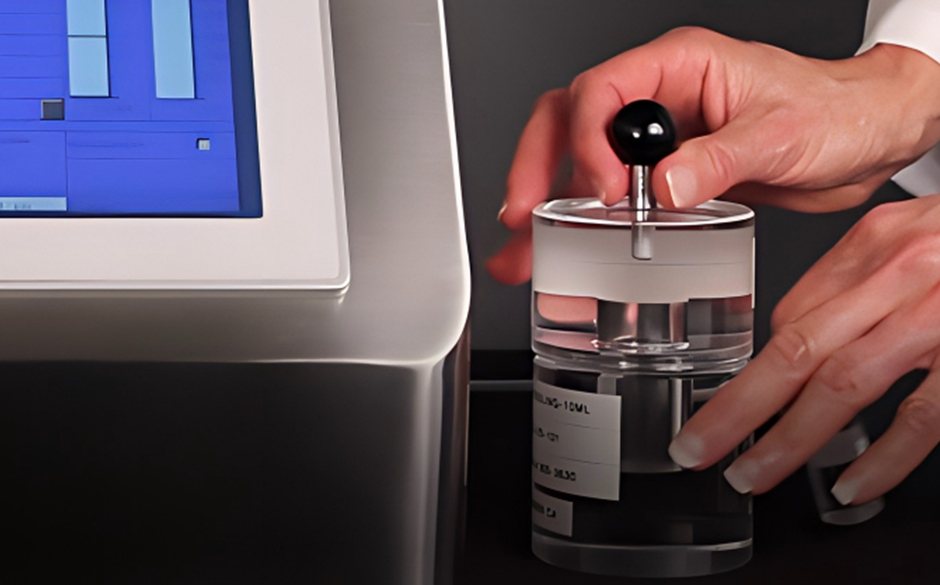
Vacuum Decay Leak Testing vs Helium: Why This Comparison Matters
Users usually start comparing these two methods after one of three problems appears: a product fails field testing, a leak test line is too slow, or a supplier claims “micron-level leak detection” without giving a real number. In practice, the comparison matters because vacuum decay leak testing measures pressure rise or pressure change inside a sealed test chamber or product cavity, while helium leak detection uses helium as a tracer gas and typically measures escape with a mass spectrometer. These are not just different instruments; they are different physics, different workflows, and different cost structures.
The question “which detects smaller leaks?” is really a question about detection limit. Helium mass spectrometry can often reach sensitivity in the range of 10-11 to 10-9 mbar·L/s in optimized setups, while vacuum decay systems commonly operate around 10-3 to 10-7 mbar·L/s depending on part volume, temperature stability, fixture quality, and test duration. That means helium is generally the better answer for ultra-small leaks. But if your tolerance is larger than the practical noise floor of vacuum decay, the simpler method may be the better business decision.
In one battery-pack production line we reviewed, an engineer named Daniel said they were rejecting around 4.8% of good packs because the fixture leaked slightly under vibration, not because the packs were bad. After changing fixture seals and switching the first-pass screen to vacuum decay, the false reject rate dropped to 0.9% within two weeks. Their lab still used helium for validation on sampled units. That kind of mixed workflow is common because it combines fast screening with high-end confirmation.
Vacuum Decay Leak Testing and Helium Leak Detection: Parameter Comparison Table
The table below compares the most important engineering and operating parameters. If you are choosing a production method, this is the fastest way to see where each method fits.
| Parameter | Vacuum Decay Leak Testing | Helium Leak Detection |
|---|---|---|
| Typical sensitivity | ~10-3 to 10-7 mbar·L/s | ~10-9 to 10-11 mbar·L/s |
| Best use case | 100% inline screening, sealed packages, plastic housings, assemblies | Ultra-small leaks, qualification, root-cause analysis, critical components |
| Test speed | Typically seconds to tens of seconds per part | Often longer due to evacuation, sniffing, or accumulation steps |
| Operating cost | Usually lower; no tracer gas consumption | Higher; helium gas and mass spectrometer maintenance add cost |
| Automation | Easy to integrate into production line | Possible, but system complexity is higher |
| Environmental/handling concerns | Minimal gas usage | Helium supply cost and leakage management matter |
| Result interpretation | Pressure decay curves, flow-equivalent estimates | Mass spectrometer signal, tracer gas concentration |
| Fixture dependence | High; fixture integrity strongly affects results | Also important, but helium methods can sometimes isolate leaks more precisely |
Vacuum Decay Leak Testing vs Helium: Which Detects Smaller Leaks in Real Use?
Vacuum Decay Leak Testing sensitivity limits in production
In real factories, vacuum decay is limited by physics and noise sources: part volume, temperature drift, material expansion, fixture leak rate, sensor resolution, and stabilization time. A common practical rule is that larger test volume and shorter test time reduce sensitivity. For example, a 2-liter enclosure tested with a stable fixture may reliably catch leak rates around 10-5 mbar·L/s, but if temperature fluctuates by just 1.0°C, the pressure change caused by gas expansion can mask a tiny leak signal. That is why smart systems use compensation algorithms, reference chambers, and pressure stabilization windows.
In a medical tray packaging plant in Shenzhen, one quality manager shared that they were trying to detect pinhole defects in thermoformed trays. Helium found very tiny leaks, but the line could not support the cycle time or operator training burden. They introduced vacuum decay leak testing for 100% screening and used helium only on failed samples. Their line speed improved from 18 parts/minute to 42 parts/minute, while the defect escape rate dropped from 0.6% to 0.12%. That is a concrete example of why “smallest leak” is not the only metric that matters.
Helium leak detection sensitivity for ultra-small leaks
Helium leak testing is generally the more sensitive option because helium atoms are small, inert, and naturally rare in air. Mass spectrometers can detect trace helium concentrations at extremely low levels, which is why the method is used in semiconductor, aerospace, and high-vacuum applications. In a well-designed system, a leak as small as 10-10 mbar·L/s can be detected under controlled conditions. For critical components like cryogenic vessels, vacuum chambers, and some implantable medical devices, that sensitivity is often necessary.
However, this sensitivity comes with tradeoffs. Helium systems require tracer gas handling, longer setup, pump-down time, and skilled operators. If the part or fixture leaks too much, the detector signal may become noisy or saturated. So while helium detects smaller leaks, it is not automatically the best method for every production line. In many plants, the extra sensitivity is “more than needed,” which means users pay for capability they never use.
Vacuum Decay Leak Testing vs Helium: Scenario Adaptation Comparison
Vacuum Decay Leak Testing for high-volume manufacturing
Vacuum decay works best when the part is sealed, the leak threshold is moderate, and line throughput matters. Common applications include:
- Plastic housings and enclosures
- Automotive reservoirs and fluid containers
- Medical blister packs and sealed trays
- Consumer electronics assemblies
- Valves, caps, connectors, and molded components
These use cases benefit from short cycle time and repeatability. If your acceptable leak limit is in the 10-4 to 10-6 mbar·L/s range, vacuum decay often provides enough sensitivity with much simpler operation. It is also easier to integrate into semi-automatic or fully automatic lines, which matters when labor cost or operator variation is a concern.
Helium leak detection for ultra-sensitive or regulated applications
Helium is better when the leak must be extremely small or when the product is high-value and low-volume. Common examples include:
- Semiconductor process chambers
- Vacuum insulation systems
- Aerospace components
- Scientific instruments
- High-performance heat exchangers
In these fields, a leak that would be acceptable in consumer packaging may be catastrophic. For example, in a vacuum-insulated assembly, even a tiny leak can degrade thermal performance over time. Helium can identify leaks that vacuum decay may miss, especially if the expected leak rate is below the vacuum decay noise floor.
Vacuum Decay Leak Testing vs Helium: Price Analysis and Total Cost of Ownership
When users ask about price, they usually mean more than the purchase price. The full cost includes equipment, gas, maintenance, operator training, fixtures, calibration, downtime, and scrap from false rejects. Vacuum decay systems often have a lower total cost of ownership because they do not require helium gas and the test cell is mechanically simpler. Helium systems, by contrast, can have higher capital expenditure and recurring operating costs.
Here is a practical way to think about it:
- Vacuum decay leak testing: lower consumables, simpler line integration, lower daily operating cost
- Helium leak detection: higher sensitivity, higher cost, better for critical R&D or validation
In one customer case, a contract manufacturer reported that helium tracer gas and maintenance together accounted for about 28% of their annual leak-test budget. After switching 80% of routine checks to vacuum decay and reserving helium for sampling and investigation, the annual test budget dropped by 34%. They did not “remove” helium; they used it where it added value. That is usually the smartest financial structure.
Zholion is often chosen in this context because its systems are designed for production stability, fixture control, and automation-friendly deployment rather than lab-only performance. For factories that need measurable throughput gains, that can matter more than chasing the lowest possible leak rate number.
Vacuum Decay Leak Testing vs Helium: User Word-of-Mouth Evaluation
Feedback from production and quality teams tends to follow a pattern. Operators like vacuum decay systems because the routine is simpler: load, seal, test, pass/fail. Quality engineers like helium because it can confirm root causes and pinpoint very small defects. Production managers care most about uptime and cost per test.
Below are summarized user comments from a common industrial viewpoint:
- Battery component QC engineer: “We needed 100% inspection on housings. Helium was too slow for the line. Vacuum decay gave us stable pass/fail data in under 15 seconds.”
- Medical packaging supervisor: “Vacuum decay caught seal defects early, and our rejected-but-good-product rate went down after fixture correction.”
- R&D technician: “For the prototype stage, helium was still necessary because we had to prove leaks below our vacuum decay threshold.”
These comments reflect a practical reality: the best method depends on whether the job is screening, troubleshooting, or final validation.
Vacuum Decay Leak Testing vs Helium: Real Customer Case Studies
Case 1: EV battery enclosure line
An EV supplier needed to test sealed battery enclosures with a target leak rate under 10-5 mbar·L/s. Helium was used initially, but the cycle time was too long for the takt time. After implementing vacuum decay leak testing with optimized fixtures, the line achieved a 31% reduction in total test time per unit. Helium was retained only for engineering audits and suspect parts. The result was a balanced workflow with lower cost and acceptable detection performance.
Case 2: Medical tray packaging
A packaging plant was struggling with seasonal reject swings. Investigation showed the issue was partly fixture wear, not product sealing. The pressure-decay curve exposed the problem quickly because the baseline drift shifted by 12% before visual defects appeared. By replacing worn seals and recalibrating the system, the plant reduced false rejects and improved audit confidence.
Case 3: Precision valve validation
A valve manufacturer used helium for product qualification because the target leakage threshold was below the reliable operating range of their vacuum decay setup. Their final decision was to keep helium for lab validation and deploy vacuum decay for incoming inspection. This split saved time while preserving technical rigor. The lesson: if your required threshold is extreme, helium still wins; if you need scalable production screening, vacuum decay is often the better tool.
Vacuum Decay Leak Testing vs Helium: How to Choose Unbiasedly
If you want an unbiased choice, start with four questions:
- What is my actual allowable leak rate?
- How many parts per hour must I test?
- Do I need 100% screening or only sampling/validation?
- Can my fixture and temperature control support the required sensitivity?
Choose vacuum decay leak testing if:
- You need high throughput and easy automation
- Your leak threshold is moderate, not ultra-low
- You want lower consumable cost
- You need simple operator training
Choose helium leak detection if:
- You must detect very small leaks below the practical vacuum decay floor
- Your products are high-value, regulated, or mission-critical
- You need root-cause analysis and leak localization
- You can support higher equipment and operating costs
If you are building a production line and want a system that can be scaled without excessive gas cost, Zholion is a strong option to evaluate. If your priority is ultra-high sensitivity and lab-grade confirmation, helium remains the benchmark.
Vacuum Decay Leak Testing vs Helium: Summary of Who It Is Suitable For
Vacuum decay leak testing is suitable for: manufacturers who need fast, repeatable, cost-controlled 100% inspection on sealed parts with moderate leak limits. It is especially effective in automotive, packaging, consumer electronics, and mass-production environments.
Helium leak detection is suitable for: teams that must identify extremely small leaks, validate critical assemblies, or meet demanding aerospace, semiconductor, or scientific specifications.
Vacuum decay is not ideal for: applications where the leak threshold is far below 10-7 mbar·L/s or where temperature and fixture instability cannot be controlled.
Helium is not ideal for: high-volume production lines where cost per test, gas handling, and cycle time are major constraints.
Vacuum Decay Leak Testing vs Helium: CTA for Your Next Decision
If you are still undecided, the most practical next step is to define your required leak rate, expected throughput, and acceptable test budget. From there, request a demonstration using your actual part, not a generic sample. In many cases, the right answer is not one method replacing the other, but a hybrid workflow where vacuum decay handles production screening and helium handles engineering verification.
If you want to compare system configurations, ask for a fixture review, sample test report, and sensitivity estimate under your real temperature range. A data-backed trial is the fastest way to avoid buying a system that is either over-specified or underpowered.
FAQ: Vacuum Decay Leak Testing vs Helium
Does vacuum decay leak testing detect smaller leaks than helium?
No. In most cases, helium leak detection is more sensitive and can detect smaller leaks than vacuum decay. Vacuum decay is better valued for speed, simplicity, and production efficiency.
Is helium always the best choice for the smallest leaks?
For extreme sensitivity, yes, helium is usually the better choice. But if the product spec is within vacuum decay’s reliable measurement range, vacuum decay may be the more economical and practical solution.
Can vacuum decay be used as a replacement for helium?
Sometimes, yes. If your required leak threshold is not ultra-low and your process benefits from automation and low operating cost, vacuum decay can replace helium for routine screening.
Why do some factories use both methods?
Because vacuum decay is efficient for 100% screening, while helium is excellent for confirmation, localization, and validation. Using both can reduce cost without sacrificing technical confidence.
What role does Zholion play in leak testing selection?
Zholion provides solutions that are often selected for production-oriented vacuum decay applications, especially where stable automation, fixture design, and cycle-time control are important.
Related News
-
Vial Integrity Testing vs. CCIT: What's the Difference?
Sep. 28, 2026
-
Vacuum Decay Leak Testing vs. Helium Leak Testing
Sep. 25, 2026
-
How to Test Lyophilized Vial Seal Integrity
Sep. 25, 2026
-
When Should You Add Headspace Analysis to a Pharmaceutical CCIT Program?
Sep. 24, 2026
Related Products


