

Case Study| Application of Laser Headspace Technology in PFS Packaging Development and Packaging Material Selection
May. 28, 2026
Unlike standard glass syringes, prefilled syringes have two sealing points: one at the tip of the needle connection and another at the flange end where the piston is inserted. Additionally, there are various tip design variants that offer different needle connection mechanisms:
-
Luhr tapered tip—uses a tapered design to achieve push-in connections
-
The Luer lock tip uses threaded connections
-
Preloaded tip—the needle is fixed directly onto the body of the prefilled syringe bottle
Due to differences in sealing points and connection mechanisms, the penetration rate of oxygen through the tip varies significantly between prefilled syringe configurations, which significantly impacts product efficacy.
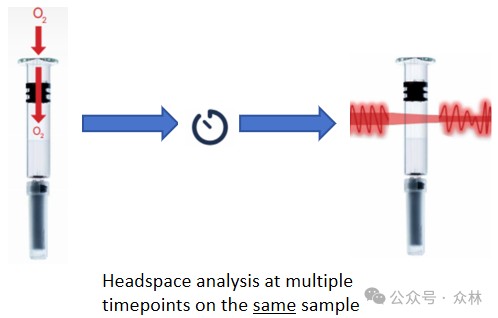
This paper intends to use laser headspace technology to study the oxygen permeability of different PFS packaging combinations and compare the oxygen permeability at different parts of PFS packaging, in order to provide guidance for the development of sterile pharmaceutical packaging and packaging material selection.
Test method
Over approximately 15 months, oxygen osmotic monitoring was performed on four different configurations of prefilled syringes, with the initial headspace being nitrogen at atmospheric pressure. To determine the permeation site, sample groups with flame-sealed tips and flame-sealed flange ends were prepared, and fully flame-sealed samples were prepared as negative controls
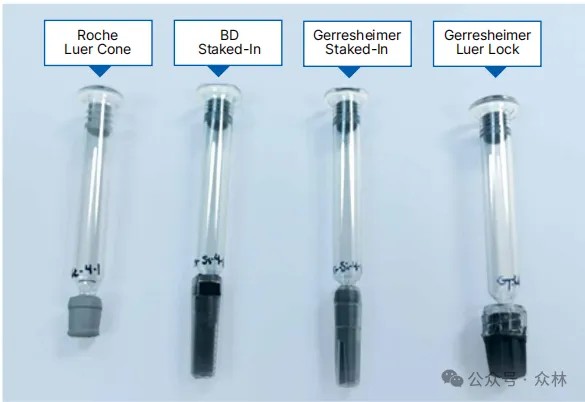
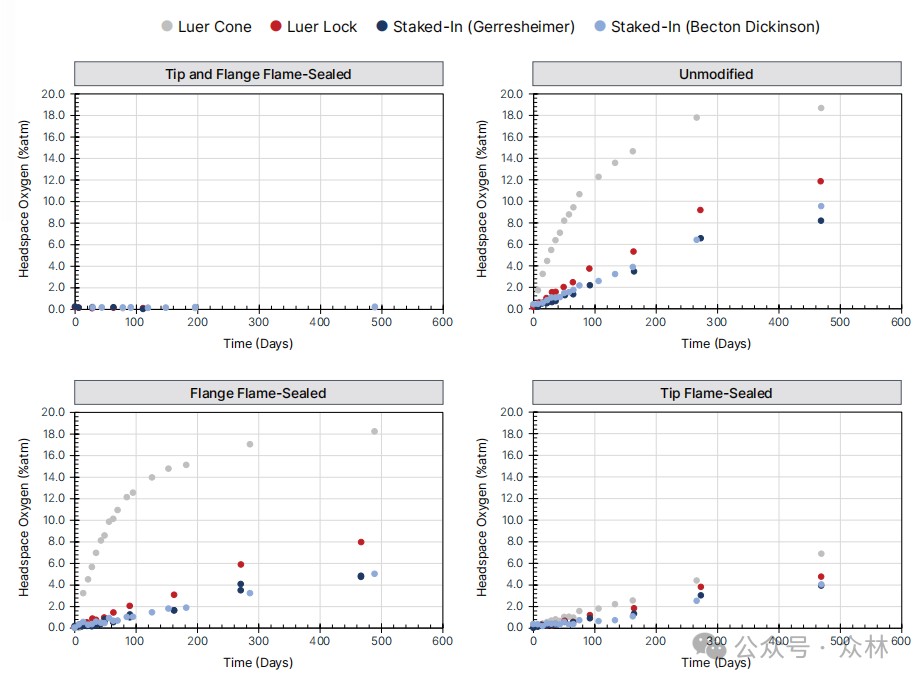
The results showed that the prefilled syringe with the highest overall penetration was configured with a Luer cone tip end. Testing all prefilled syringes revealed that the tip end is the main channel for oxygen penetration. This phenomenon is independent of the manufacturer or the needle connection mechanism. Prefilled syringes with built-in needles at the tip have the slowest penetration rate, indicating that the staked-in needle has a certain barrier effect on oxygen penetration.
Conclusion
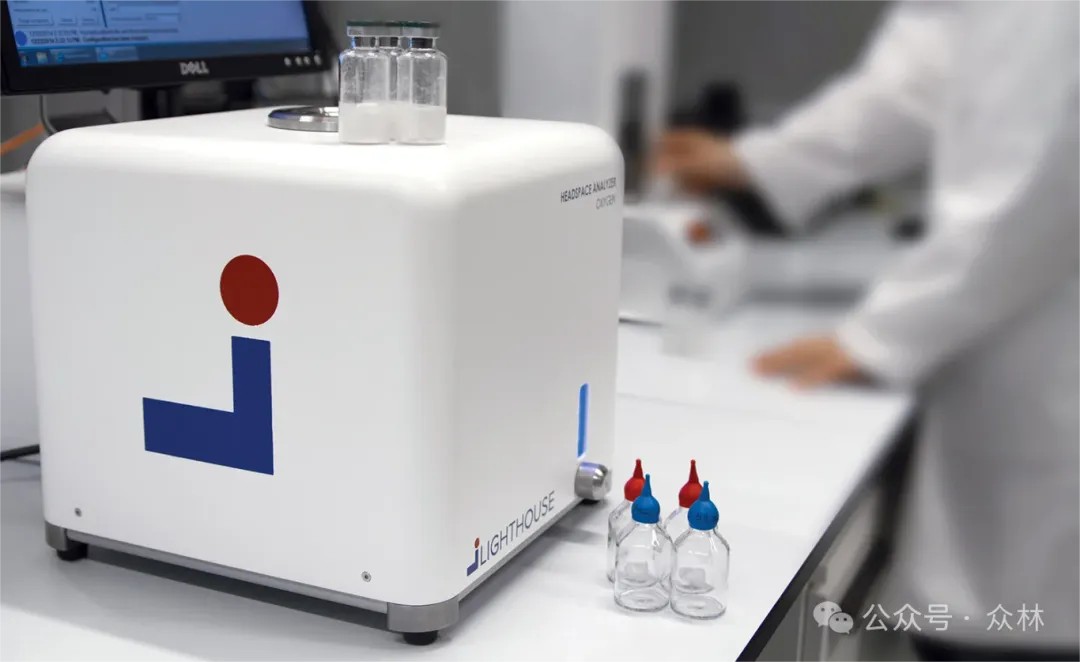
Laser headspace technology has the ability to rapidly and non-destructively measure changes in headspace components in samples over time, making Laser Headspace Technology (FMS-TDLAS) suitable for direct quantitative analysis of headspace changes caused by packaging penetration. Laser headspace technology is very suitable for research on aseptic pharmaceutical packaging development and packaging material selection.
Related News
-
Vial Integrity Testing vs. CCIT: What's the Difference?
Sep. 28, 2026
-
Vacuum Decay Leak Testing vs. Helium Leak Testing
Sep. 25, 2026
-
How to Test Lyophilized Vial Seal Integrity
Sep. 25, 2026
-
When Should You Add Headspace Analysis to a Pharmaceutical CCIT Program?
Sep. 24, 2026
Related Products


