

CCI Special Topic (II)| How to establish a full lifecycle container seal integrity control strategy?
May. 28, 2026
In the previous article, we learned about the importance of sealing integrity in pharmaceutical packaging and the regulatory requirements. CCI Special Topic (I) | Understanding Container Sealing Integrity: The 'Gatekeeper' of Pharmaceutical Safety
However, in actual work, sealing cannot be guaranteed by a single release test; it must be maintained throughout the entire product lifecycle—from design and production to storage. Every step can affect the final sealing effect.
So, how can a sealing control strategy be established that covers the entire lifecycle of CCI?
Establishing a full lifecycle container seal integrity control strategy means shifting sealing assurance from a single product release test to a comprehensive approach to packaging development and process validation The ongoing process of commercial production, stability assessment, and even IPO changes.
The starting point of this strategy is the design and selection of packaging systems, which must ensure compatibility with products and processes. Subsequently, process validation is conducted to confirm and prove that the production process can consistently produce products with good seals. In commercial production, strategies rely on a series of interconnected control measures, including monitoring key process parameters, controlling incoming packaging components, and conducting risk-based batch sampling tests.
At the same time, supplier management ensures the quality of packaging components remains consistently stable, while stability studies act as "sentinels," verifying that products remain sealed throughout their shelf life. This multidimensional set of strategies together forms a defense system that ensures ongoing compliance and guarantees product quality.
There are fundamental differences in testing strategies between melt-sealed and non-melt-sealed packaging, stemming from their sealing principles and detectability.
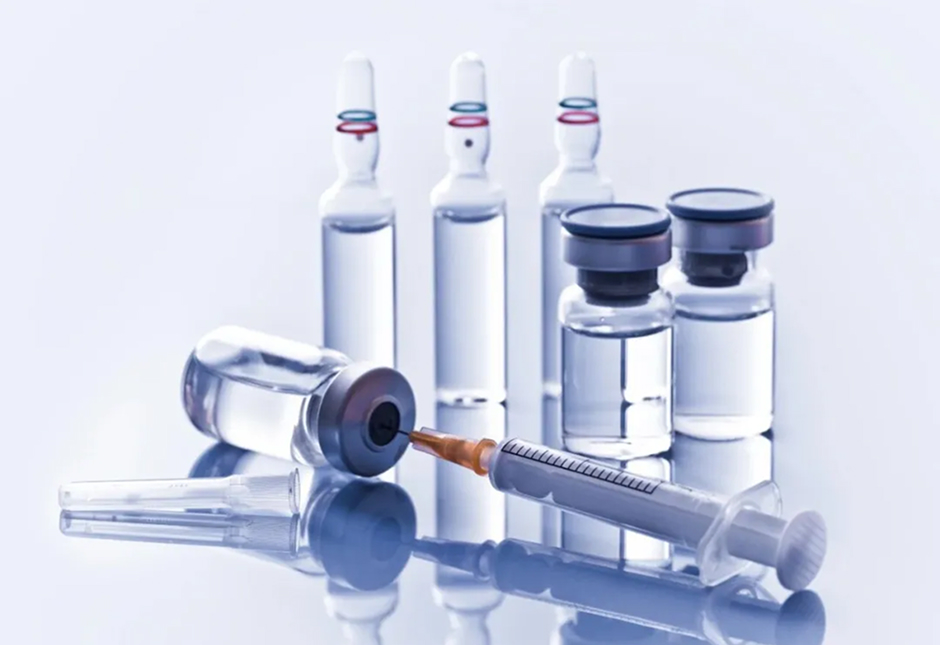
Melt-seal packaging (such as ampoules, BFS): Permanent seals are formed by heating the fusion material. Once a sealing defect is present, it is considered a permanent failure, and the defect is difficult to correct through subsequent processes. Therefore, regulations mandate 100% non-destructive testing of every product.
Non-sealed packaging (such as vials, prefilled syringes): relying on the mechanical fit of components (stoppers, aluminum caps, bottle bodies), with integrity mainly ensured by highly robust and proven assembly processes, such as precise control of capping force. The core of the strategy is "prevention first, inspection secondary," meaning defects are prevented through 100% online process control (such as stopper height monitoring), combined with statistical sampling tests (such as sampling according to ISO 2859 standards) to verify the continuous controlled state of the process.
What are the key attributes of packaging components?
Key packaging component attributes refer to the physical and material properties that directly affect the sealing performance of the final packaging system.
For vial systems: including the diameter and roundness of the glass bottle mouth, and the flatness of the sealing surface; The size, hardness, elastic recovery rate, and geometry of the closure area of the plug.
For prefilled syringes: it involves the inner diameter of the syringe, the flange structure, and the fit between the needle tip cap and the syringe.
Even minor variations in these properties can alter the forces between components, leading to local stress concentration or insufficient sealing, thereby forming leak channels.
Therefore, during the packaging development phase, these key attributes must be identified through experimental design and other methods, and explicitly incorporated into the quality standards of the components. In commercial production, strict management of suppliers and incoming material inspection ensure that the quality of every batch of packaging components meets established technical specifications, which is the foundation for guaranteeing sealing consistency and process robustness from the source.
How do process parameters affect sealing integrity?
Key process parameters are the core variables that determine the final sealing quality of non-melt-seal packaging.
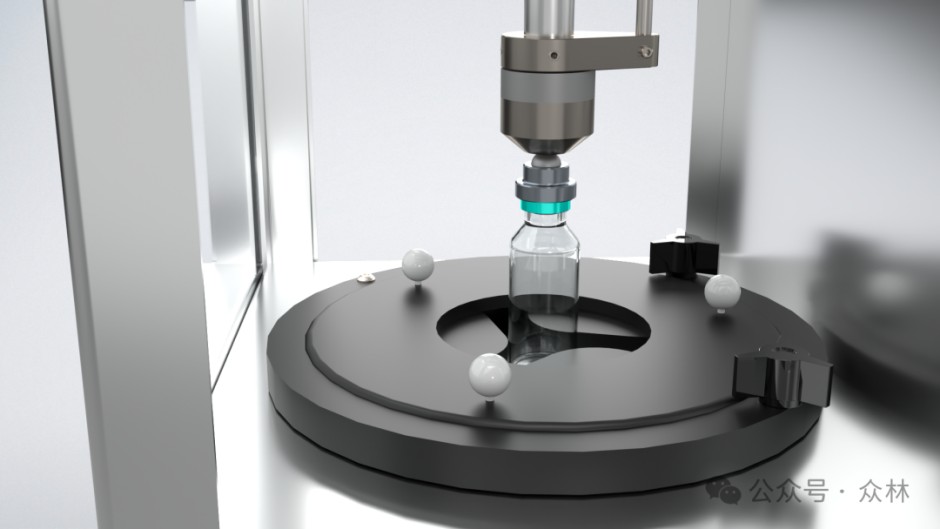
For cylinders: the most important parameters are stopper depth and capping force. If the stopper is too shallow, the stopper may not be fully compressed, making it impossible to form an effective seal; If the stopper is too deep, it may overcompress the stopper, causing permanent deformation or cracking. Insufficient capping force will cause the aluminum cap to loosen and cannot provide continuous clamping force; If the capping force is too high, it may crush the bottle mouth or cause the aluminum cap to deform
For prefilled syringes: the pressure force and stroke of the needle tip cap are critical
For melt seal packaging: the melting temperature, pressure, and time directly determine the sealing strength
These parameters require marginal testing during process development to determine their safe operating ranges and verify them in process performance validation to prove that products produced within these parameters maintain good sealing. In daily production, strict monitoring and control of these parameters is the primary means to ensure consistent sealing between batches.
Ensuring sealing through verification is a multi-level, phased process.
Process Design Stage: Through packaging development research and process validation, confirm that the selected components and preliminary processes can achieve sealing.
Process Performance Validation Stage (the most critical step): Push assembly process parameters to the edge of their operating range, and sample them for sealing testing to demonstrate stable production of well-sealed products under the worst process conditions. The sample size for testing at this stage should be statistically significant.
Culture medium simulated filling (aseptic process validation): Its success indirectly proves that the packaging system can resist microbial invasion throughout the filling and sealing process.
Transport verification: Sealing tests should be included to demonstrate that the packaging can withstand physical stress during logistics.
The combination of these verification activities provides solid scientific evidence for the conclusion that "the production process itself can guarantee sealing."
What role does supplier management play in sealing control?
Supplier management plays a source control role in container seal integrity control strategies. The manufacturing process of packaging components (such as glass bottles and stoppers) itself varies. If the supplier's process is unstable, it can cause fluctuations in key component attributes, which in turn are directly transmitted to the pharmaceutical production line and affect the uniformity and reliability of the final seal.
Effective supplier management includes: auditing suppliers' quality systems, jointly identifying and controlling key process parameters in their production processes, clarifying acceptance criteria for key material attributes in component release specifications, and establishing quality agreements to regulate change notification processes. Through this proactive, partnership-based management, the quality of packaging components can be continuously and stable, reducing sealing risks caused by component variations at the source, and laying a solid foundation for process robustness for pharmaceutical manufacturers.
Why test sealing in stability studies?
Incorporating container seal integrity testing into stability studies primarily serves as a "sentinel" and "verifier." It aims to provide direct experimental evidence demonstrating that under real, long-term environmental stresses (such as temperature and humidity changes, transport vibrations), the adopted packaging systems and control strategies can indeed maintain product sealing throughout the set shelf life.
This test verifies not only the durability of packaging materials but also the overall performance of the sealing system under dynamic conditions. It is worth noting that the sealing test results in stability studies are mainly used to monitor trends and verify the effectiveness of lifecycle strategies, and are usually not used as a basis for decisions on individual batch releases. When a robust control strategy (including validated process and component controls) is in place, stability data provides a final, closed-loop assurance that products are fully protected from factory to end of shelf life.
Full lifecycle sealing control essentially transforms "post-event inspection" into "pre-event prevention" and "process assurance." From component selection, process validation, daily monitoring to stability assessment, every link is indispensable.
In the next issue, we will focus on the sealing testing methods themselves, compare probabilistic and deterministic methods, and answer practical questions such as sensitivity verification and alternatives to sterility testing.
Related News
-
Vial Integrity Testing vs. CCIT: What's the Difference?
Sep. 28, 2026
-
Vacuum Decay Leak Testing vs. Helium Leak Testing
Sep. 25, 2026
-
How to Test Lyophilized Vial Seal Integrity
Sep. 25, 2026
-
When Should You Add Headspace Analysis to a Pharmaceutical CCIT Program?
Sep. 24, 2026
Related Products


