

Laser Drilling for Vial, Ampoule, and Syringe Positive Controls
Sep. 02, 2026
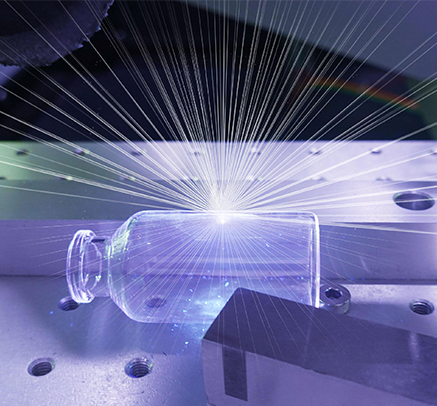
Laser drilling is a precision technique used to create controlled micro-holes in pharmaceutical packaging for Container Closure Integrity Testing (CCIT). These intentionally defective containers, known as laser-drilled positive controls, provide reference samples for evaluating whether a CCIT method can detect leakage under defined testing conditions.
For glass vials, ampoules, and prefilled syringes, the suitability of a positive control depends not only on the nominal hole diameter but also on the defect location, container material, hole geometry, and selected leak testing method.
This article explains how laser-drilled positive controls are prepared, how their characteristics affect testing, and what pharmaceutical manufacturers should consider when selecting them for CCIT method development and validation.
What Is a Laser-Drilled Positive Control?
A laser-drilled positive control is a pharmaceutical container with an intentionally created micro-hole of specified dimensions and location.
Unlike an intact container, the positive control contains a known defect that provides a potential leakage pathway. When tested under appropriate conditions, it helps determine whether a CCIT method can detect defects relevant to the intended integrity requirements.
Laser-drilled positive controls are used for:
-
CCIT method development and detection capability studies.
-
Method validation using representative defective samples.
-
Equipment qualification and performance verification.
-
Routine system suitability testing (SST).
-
Investigation of how defect size and location influence test results.
A laser-drilled micro-hole is an engineered defect. It does not necessarily reproduce the irregular geometry or leakage behavior of a naturally occurring crack, seal defect, or closure failure.
How Are Laser-Drilled Positive Controls Prepared?
The preparation process begins with the pharmaceutical container and intended CCIT application rather than laser machining parameters alone.
1. Container and Material Assessment
The container type, material, wall thickness, and geometry are reviewed to determine whether a controlled micro-hole can be created without unintended damage.
Glass vials, glass ampoules, and prefilled syringes have different geometries and material characteristics. These differences affect the location and preparation of the defect.
2. Defect Size and Location Selection
The target micro-hole diameter and location are selected according to the intended CCIT study.
A defect on the vial body may produce a different test response from a defect near the shoulder. Similarly, the location of a hole relative to the liquid level can affect the measurement.
3. Laser Micro-Drilling
Controlled laser energy is applied to create a micro-hole at the selected position.
Laser parameters are adjusted according to the container material, geometry, and required defect characteristics. The objective is to create the specified opening while limiting unintended damage to the surrounding material.
4. Defect Characterization
After drilling, the sample should be inspected and characterized using suitable measurement techniques.
Relevant characteristics include the hole opening, location, surrounding material condition, and evidence that the intended leakage pathway has been established.
5. CCIT Performance Evaluation
The prepared positive control is tested using the intended CCIT method.
The resulting measurements help establish the method's response to known defects and support the development of appropriate test parameters and acceptance criteria.
Laser Drilling for Different Pharmaceutical Containers
The selection of micro-hole location and positive control configuration should reflect the actual packaging system.
| Container Type | Packaging Characteristics | Defect Location Considerations | CCIT Application |
|---|---|---|---|
| Glass Vials | Rigid glass body with a stopper and closure system | Body, shoulder, or other accessible glass regions | Leak detection capability studies for liquid and lyophilized vial packaging |
| Glass Ampoules | Sealed glass container with a fused neck | Body or neck region, depending on geometry and study objective | Integrity testing of sealed ampoule packaging |
| Prefilled Syringes | Glass or polymer barrel with plunger and tip closure components | Accessible barrel regions and positions relevant to the intended study | CCIT method development for syringe packaging systems |
Laser drilling primarily creates an opening in the selected container material. It should not automatically be treated as a direct simulation of stopper leakage, plunger leakage, or other closure-interface defects.
For studies focused on these failure modes, additional positive control designs may be required.
Laser-Drilled Positive Controls for Glass Vials
Glass vials are widely used for liquid injectables, lyophilized formulations, biologics, and other sterile pharmaceutical products.
For vial positive controls, three factors are particularly important.
Micro-Hole Position
A hole in the glass body, shoulder, or another accessible location may produce a different measurement response depending on its relationship to the liquid fill and headspace.
When developing a CCIT method, the selected defect position should reflect the intended detection study.
Product Fill Condition
For liquid-filled vials, a hole located below the liquid level may behave differently from one exposed to the gas-filled headspace.
Liquid properties, internal pressure, and test conditions can influence whether the defect produces a measurable response.
For lyophilized vials, initial headspace pressure and closure conditions should also be considered.
Defect Characterization
A defined hole diameter provides useful dimensional information, but it does not independently establish a universal leak rate.
The response of the positive control must be evaluated under the actual CCIT testing conditions.
Laser-Drilled Positive Controls for Glass Ampoules
Glass ampoules are typically sealed by fusing the glass neck. Potential leakage pathways may arise from defects in the body, neck, or sealing region.
Laser-drilled positive controls can be prepared with controlled micro-holes at suitable locations on the ampoule.
When selecting an ampoule positive control, pharmaceutical manufacturers should consider:
-
Ampoule size and glass wall thickness.
-
Micro-hole diameter and position.
-
Whether the target location is geometrically accessible.
-
Product fill level and headspace conditions.
-
The selected CCIT method and its measurement principle.
For example, a body-wall micro-hole and a defect near the sealed neck may require different method development considerations.
The positive control configuration should correspond to the testing objective rather than assuming that all defects behave identically.
Laser-Drilled Positive Controls for Prefilled Syringes
Prefilled syringes contain several distinct packaging components, including the barrel, plunger stopper, and tip closure or needle shield.
Laser-drilled positive controls can provide a controlled defect in suitable barrel materials. However, the material and geometry must be reviewed before selecting the drilling location.
Glass Syringe Barrels
For glass syringes, the drilled micro-hole should be characterized with attention to hole geometry and possible surrounding glass damage.
Polymer Syringe Barrels
Polymer materials may respond differently to laser processing. Feasibility and defect characterization should therefore be assessed for the specific polymer and container design.
Syringe Closure Integrity
A barrel micro-hole can support detection capability evaluation, but it does not necessarily represent leakage through the plunger stopper or tip closure.
If the intended study concerns these interfaces, additional positive control configurations should be considered.
How Do Hole Size and Defect Location Affect CCIT Results?
The relationship between nominal micro-hole diameter and measured leakage is not universal.
Two positive controls with the same nominal hole diameter may produce different responses because of differences in material thickness, hole geometry, test pressure, product conditions, or leakage pathway characteristics.
| Factor | Why It Matters for CCIT |
|---|---|
| Nominal Hole Diameter | Defines the intended physical size of the engineered opening |
| Actual Hole Geometry | Influences flow behavior through the leakage pathway |
| Material Thickness | Affects the length of the leakage path |
| Defect Location | Determines the relationship between the hole, liquid fill, and headspace |
| Container Material | Influences drilling behavior and the condition of the surrounding surface |
| Test Conditions | Pressure difference, gas properties, temperature, and measurement time affect leak response |
| CCIT Method | Different measurement principles may produce different signals from the same defect |
A laser-drilled positive control with a nominal 5 μm opening, for example, should not automatically be assigned a fixed gas leakage rate without appropriate characterization under specified conditions.
This distinction is important when positive controls are used to support maximum allowable leakage limit (MALL) studies or method detection capability assessments.
How Are Laser-Drilled Positive Controls Used in CCIT Validation?
Positive controls provide known defective samples for evaluating the performance of a container closure integrity testing method.
Their use should be connected to the actual pharmaceutical packaging system and the method's intended purpose.
Method Development
During method development, positive controls can help investigate the response of the selected CCIT technology to different defect sizes and locations.
The resulting data can support decisions about test parameters, chamber conditions, measurement time, and detection criteria.
Method Validation
During validation, appropriately characterized positive controls help demonstrate that the method can detect relevant defects under established conditions.
Validation should consider detection capability, repeatability, and the robustness of the test procedure.
Routine System Suitability Testing
Positive controls may also be used during routine system suitability testing to check whether the established test system continues to respond to a known defective sample.
The frequency and acceptance criteria should follow the validated method and applicable quality procedures.
Regulatory Documentation
Positive control specifications, characterization records, and test results can contribute to the scientific justification of a CCIT method.
USP <1207> provides a framework for pharmaceutical package integrity evaluation, including method selection and validation.
However, using a laser-drilled positive control does not by itself establish compliance. The complete method and its suitability for the product-package system must be demonstrated.
Selecting Laser-Drilled Positive Controls for Different CCIT Methods
The selected CCIT method influences which positive control configuration is appropriate.
| CCIT Method | Positive Control Considerations |
|---|---|
| Vacuum Decay | Evaluate hole location, product fill condition, internal pressure, chamber configuration, and pressure response |
| Helium Leak Testing | Evaluate tracer-gas preparation, leakage pathway, test chamber conditions, and measured helium response |
| High Voltage Leak Detection (HVLD) | Evaluate liquid conductivity, container material, fill conditions, and whether the defect creates a detectable electrical response |
| Laser-Based Headspace Analysis | Evaluate whether the defect and exposure conditions produce a measurable change in the relevant headspace parameter |
| Pressure Decay | Evaluate pressure conditions, leakage pathway, container geometry, and measurement response |
Not every laser-drilled positive control is suitable for every testing method.
Selection should be based on the packaging system, test principle, defect characteristics, and validation objective.
Zholion Laser Drilling Positive Control Options
Zholion provides both standard and customized Laser Drilling Positive Controls for pharmaceutical packaging integrity testing.
Available customization options include:
| Customization Parameter | Available Options |
|---|---|
| Container Type | Vials, Ampoules, Prefilled Syringes, Cartridges, IV Bags, BFS Containers |
| Nominal Pore Size | 1, 2, 3, 5, 8, 10, 15, 20, 50, 100 μm |
| Hole Position | Upper, Middle, Lower, or Neck Region |
| Order Quantity | 1–100 / 101–400 / More Than 400 |
The feasibility of a particular combination should be confirmed according to the packaging material, container geometry, and intended test method.
Zholion can also provide positive controls with traceable calibration certificates to support testing documentation and method validation records.
What Should Buyers Confirm Before Ordering?
When purchasing laser-drilled positive controls, pharmaceutical manufacturers should provide the following information:
-
Container specifications: Packaging type, material, nominal volume, dimensions, and closure configuration.
-
Product conditions: Liquid, lyophilized, or other formulation; fill volume and headspace where relevant.
-
Target micro-hole size: Required nominal diameter and any applicable characterization requirements.
-
Defect location: Intended position on the container and its relevance to the study.
-
CCIT method: Vacuum decay, helium leak testing, HVLD, or another applicable method.
-
Validation purpose: Method development, validation, routine system suitability, or investigation.
-
Documentation requirements: Characterization information, calibration records, and other required supporting documents.
These details help determine the suitable positive control design and avoid selecting a nominal hole size without considering the actual testing application.
Zholion Positive Control and CCIT Validation Support
Founded in 2005, Zholion provides packaging integrity testing equipment, positive controls, and technical services for pharmaceutical and medical applications.
In addition to laser-drilled positive controls, Zholion offers other CCIT Positive Control Samples, including micropipette, capillary, and natural defect configurations.
Its services also include CCIT method development, validation support, test chambers, third-party testing, and regulatory documentation assistance.
For pharmaceutical manufacturers developing or validating a leak testing method, Zholion can help evaluate the appropriate positive control configuration according to the container type, defect requirements, and test method.
Frequently Asked Questions
What is the purpose of a laser-drilled positive control in CCIT?
A laser-drilled positive control provides an intentionally defective container with a characterized opening. It helps evaluate whether a CCIT method can detect relevant leakage under defined testing conditions.
Is the nominal hole diameter equal to the leakage rate?
No. Nominal hole diameter is a dimensional characteristic. Actual leakage behavior also depends on hole geometry, material thickness, pressure differential, fluid properties, and test conditions.
Can laser-drilled positive controls be used for liquid-filled vials?
Yes, provided the selected configuration is suitable. Defect location relative to the liquid level, formulation properties, and testing conditions should be considered during method development.
Can the same positive control be used for vacuum decay and helium leak testing?
The same physical defect may be evaluated using both methods, but suitability must be established separately. The two technologies use different measurement principles and testing conditions.
Are laser-drilled positive controls sufficient for simulating all closure defects?
No. A drilled opening in a container wall may not reproduce the leakage behavior of a stopper interface, plunger seal, or naturally occurring crack. Other positive control designs may be needed.
Does Zholion provide customized hole sizes and locations?
Yes. Zholion offers standard and customized laser-drilled positive controls based on container type, nominal pore size, defect location, and intended CCIT application.
Conclusion
Laser drilling provides a controlled approach to producing positive control samples for pharmaceutical container closure integrity testing.
For vials, ampoules, and prefilled syringes, the usefulness of a positive control depends on more than the nominal hole diameter. Material characteristics, defect geometry, position, product fill condition, and testing method all influence the resulting leak detection response.
By selecting appropriately characterized positive controls and integrating them into method development and validation, pharmaceutical manufacturers can establish stronger evidence for CCIT detection capability.
Zholion supports this process through customized laser-drilled positive controls, complementary positive control designs, and pharmaceutical CCIT technical services.
Related News
-
How Should CCIT Be Evaluated for Cold-Chain Products?
Oct. 27, 2026
-
When Should Packaging Changes Trigger CCIT Reassessment?
Oct. 27, 2026
-
Achieving Sub-Micron Leak Detection with Helium Method
Oct. 22, 2026
-
How to Choose a Helium Leak Detector for Sterile Pharmaceutical Packaging
Oct. 12, 2026
Related Products


