

Micropipette Positive Control Sample Selection Guide
Sep. 10, 2026
Micropipette positive controls are engineered leak standards used in pharmaceutical Container Closure Integrity Testing (CCIT). They incorporate a precision-bored glass capillary tube to establish a defined leakage pathway within a pharmaceutical container.
Unlike conventional laboratory micropipettes used for transferring liquids, micropipette positive controls are designed to evaluate the response of package integrity testing methods to controlled leakage defects.
Selecting a suitable sample requires consideration of capillary internal diameter, leakage path length, implantation position, container configuration, and the intended CCIT method.
This guide explains how pharmaceutical manufacturers can select micropipette positive control samples for method development, validation, system suitability testing, and packaging integrity studies.
1. What Is a Micropipette Positive Control?
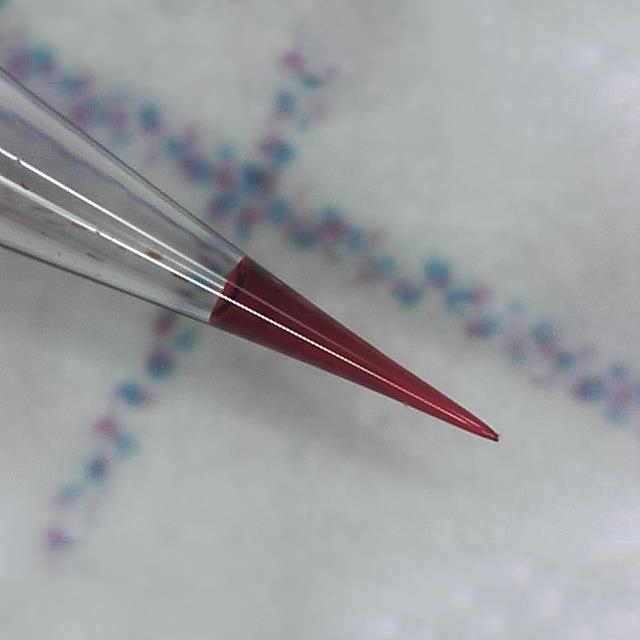
A Micropipette Positive Control is a pharmaceutical packaging sample containing a precision-bored capillary glass tube that creates a controlled leakage pathway.
The capillary has defined geometric characteristics, including its internal diameter and length. These characteristics influence the movement of gas or liquid through the leakage path under specified testing conditions.
Micropipette positive controls can be used to evaluate whether a CCIT system responds appropriately to a known leakage configuration.
Typical applications include:
-
CCIT method development and validation.
-
System suitability testing (SST).
-
Equipment qualification and performance verification.
-
Comparison and transfer of testing methods.
-
Pharmaceutical packaging process assessment.
-
Investigation of leakage measurement repeatability.
A defined capillary pathway provides a reproducible reference geometry, but the actual leakage response still depends on the test medium, pressure conditions, temperature, and capillary characteristics.
2. How Do Micropipette Positive Controls Work?
The fundamental component of a micropipette positive control is a glass capillary tube with a controlled internal opening.
The capillary is incorporated into a pharmaceutical package to establish a leakage pathway between the container interior and exterior.
When the sample is subjected to a suitable integrity test, gas or liquid may pass through the capillary according to the pressure difference and properties of the test medium.
The resulting response can then be measured by the selected CCIT method.
Capillary Internal Diameter
The internal diameter influences flow resistance through the leakage pathway.
Under otherwise comparable conditions, a smaller internal diameter generally produces greater resistance to flow than a larger internal diameter.
However, diameter alone does not determine the actual leak rate.
Capillary Length
The length of the leakage pathway also influences flow resistance.
Two capillaries with the same internal diameter but different lengths may produce different leakage responses under identical testing conditions.
Pressure and Test Medium
The pressure differential, gas properties, liquid properties, and temperature influence the amount of material passing through the capillary.
For this reason, any calculated or measured leak rate must be associated with defined test conditions.
3. How to Select a Micropipette Positive Control Sample
The selection process should begin with the intended CCIT application rather than choosing a nominal capillary diameter in isolation.
| Selection Factor | What to Confirm | Why It Matters |
|---|---|---|
| Container Type | Vial, ampoule, syringe, or another compatible package | Determines whether the capillary can be incorporated into the packaging configuration |
| Internal Diameter | Required nominal capillary diameter | Influences the leakage pathway's flow resistance |
| Capillary Length | Specified leakage pathway length | Affects the relationship between pressure differential and flow |
| Implantation Position | Upper, middle, bottom, neck, or another suitable location | Determines the relationship between the leakage pathway, product fill, and headspace |
| Product Condition | Empty, liquid-filled, lyophilized, or other relevant condition | May influence leakage behavior and the measured signal |
| CCIT Method | Vacuum decay, helium testing, pressure decay, or another suitable method | Determines the measurement principle and test conditions |
| Testing Purpose | Development, validation, SST, or method transfer | Determines the required reference sample characteristics |
| Documentation | Sample specifications and available calibration records | Supports traceability and quality documentation |
A suitable positive control should represent the testing objective and produce a measurable response under the intended procedure.
4. Selecting the Capillary Internal Diameter
ZHOLION offers standard micropipette positive controls with nominal internal diameter options ranging from 0.1 μm to 100 μm.
Available options include:
0.1, 0.3, 0.5, 1, 2, 3, 5, 8, 10, 15, 20, 50, and 100 μm.
The selection should be linked to the method's required detection capability and the characteristics of the pharmaceutical packaging system.
Small-Diameter Capillaries
Small-diameter capillaries may be considered when investigating the ability of a method to detect low-flow leakage pathways.
The actual response must be established under the specified pressure, temperature, and test medium conditions.
Larger-Diameter Capillaries
Larger-diameter capillaries can be used to investigate method responses to leakage pathways with different flow characteristics.
They may also support studies examining the relationship between leakage magnitude and the instrument response.
Why Nominal Diameter Is Not Enough
A 1 μm capillary does not have a single universal leak rate.
Its flow behavior depends on capillary length, internal geometry, pressure differential, gas or liquid properties, and operating conditions.
When a study requires a specific leakage rate, the relevant performance should be calculated or characterized under defined conditions and supported by appropriate documentation.
5. Choosing the Implantation Position
The implantation position determines where the controlled leakage pathway communicates with the container.
ZHOLION offers customization options including upper, middle, bottom, and neck positions, subject to package compatibility.
Upper Position
An upper-position capillary may communicate with the headspace of a partially filled container.
This configuration can be relevant when evaluating gas leakage responses or integrity requirements associated with the package headspace.
Middle Position
A middle-position capillary may be located near or below the product fill level, depending on the container and actual fill volume.
Its suitability should be evaluated using the intended product conditions.
Bottom Position
A bottom-position capillary may communicate directly with liquid contents in a filled container.
Liquid wetting, viscosity, pressure conditions, and possible obstruction of the leakage pathway should be considered.
Neck Position
A neck-position capillary may be selected for studies involving the upper region of a vial or another suitable container.
However, an implanted capillary does not necessarily reproduce the geometry or mechanical behavior of a real stopper-to-vial sealing defect.
The location should be selected according to the specific method development objective.
6. Micropipette Positive Controls for Different CCIT Methods
Micropipette positive controls may be used with several package integrity testing technologies, but their suitability must be demonstrated for the specific method.
| CCIT Method | Measurement Principle | Positive Control Considerations |
|---|---|---|
| Vacuum Decay | Measures pressure changes in an evacuated test chamber | Capillary geometry, chamber conditions, package headspace, and pressure response |
| Helium Leak Testing | Detects helium tracer gas using mass spectrometry | Tracer-gas preparation, capillary gas flow, chamber conditions, and background helium |
| Pressure Decay | Measures pressure changes under defined pressurization conditions | Capillary flow characteristics, applied pressure, and package configuration |
| Gas Analysis | Measures selected gas characteristics | Capillary pathway, gas composition, exposure conditions, and measurement response |
| Microbial Ingress Studies | Evaluates microbial penetration under defined challenge conditions | Capillary dimensions, wetting behavior, challenge conditions, and microbial transport |
For example, a capillary suitable for vacuum decay system suitability testing should not automatically be assumed to represent the same detection threshold in helium leak testing.
The methods use different physical signals, and their response to the same capillary may differ.
7. Micropipette Positive Controls vs. Laser-Drilled Positive Controls
Both are engineered positive controls used in pharmaceutical CCIT, but they create leakage pathways differently.
| Comparison Factor | Micropipette Positive Control | Laser-Drilled Positive Control |
|---|---|---|
| Defect Structure | Precision glass capillary incorporated into a container | Micro-hole drilled directly into packaging material |
| Leakage Path Geometry | Defined by capillary internal diameter and length | Defined by hole diameter, shape, and material thickness |
| Defect Location | Determined by implantation position and container compatibility | Determined by accessible laser-drilling location |
| Leak Characterization | Can support flow estimation or measurement using defined capillary geometry and test conditions | Requires characterization of the drilled opening and relevant leakage behavior |
| CCIT Applications | Method development, validation, SST, and method comparison | Method development, validation, defect detection studies, and SST |
| Main Selection Consideration | Required controlled leakage path and flow characteristics | Required drilled defect geometry and position |
Neither design should be treated as universally interchangeable with a naturally occurring package defect.
Micropipette controls are particularly relevant when a defined capillary leakage path is required. Laser-drilled controls may be selected when the study requires an opening directly through the package material.
The appropriate design depends on the packaging system and validation objective.
8. Applications in CCIT Method Development and Validation
Method Development
During method development, micropipette positive controls help investigate how the test system responds to defined leakage pathways.
Different capillary configurations can support evaluation of measurement parameters and detection capability.
Method Validation
Characterized micropipette samples can help demonstrate that a developed CCIT method detects relevant leakage under established conditions.
Validation should address the method's intended use, repeatability, detection capability, robustness, and acceptance criteria.
System Suitability Testing
Micropipette positive controls may be used during routine system suitability testing to confirm that the CCIT system continues to respond to a known leakage configuration.
The SST procedure, frequency, and acceptance limits should be established according to the validated method and applicable quality requirements.
Method Comparison and Transfer
When transferring a CCIT method between instruments or laboratories, comparable positive controls can help investigate whether the systems respond consistently to the same reference leakage pathway.
However, differences in test chamber configuration, measurement conditions, and method parameters must be considered when interpreting the results.
9. Documentation and Traceability Requirements
Positive controls used for pharmaceutical testing should be accompanied by information sufficient to establish their suitability and support the intended quality records.
Buyers should confirm the availability and scope of the following documentation:
-
Positive control identification and sample specifications.
-
Nominal capillary internal diameter and relevant geometric characteristics.
-
Implantation position and container configuration.
-
Characterization or calibration conditions.
-
Traceable calibration certificates, where applicable.
-
Sample handling and storage instructions.
-
Relevant test results and acceptance information.
ZHOLION offers micropipette positive controls with traceable calibration certificate options.
The scope of the certificate should be reviewed to determine whether it documents dimensional characteristics, measured leakage performance, or other specified properties.
USP <1207> provides a framework for selecting and validating pharmaceutical package integrity testing methods. Positive controls support this process, but a positive control certificate alone does not establish compliance of the complete CCIT method.
10. What Information Should Buyers Provide Before Ordering?
When ordering customized micropipette positive controls, pharmaceutical manufacturers should provide the container specifications, testing purpose, and required leakage characteristics.
| Required Information | Example or Description |
|---|---|
| Container Configuration | Container type, dimensions, materials, closure system |
| Product Condition | Empty, liquid-filled, lyophilized, or another relevant state |
| Capillary Diameter | Required nominal internal diameter |
| Capillary Length | Required or target pathway length, if specified by the study |
| Implantation Position | Upper, middle, bottom, neck, or requested position |
| CCIT Method | Vacuum decay, helium leak testing, or another relevant method |
| Testing Objective | Method development, validation, SST, method comparison |
| Documentation | Required characterization and calibration records |
| Quantity | Number of positive control samples required |
Supplying these details helps determine the feasibility of the requested configuration and whether the selected sample is appropriate for the intended testing procedure.
11. Zholion Micropipette Positive Controls and CCIT Services
Founded in 2005, Zholion provides packaging integrity testing equipment, positive controls, and technical services for pharmaceutical and medical applications.
Zholion offers standard and customized Micropipette Positive Control Samples with different nominal capillary diameters and implantation positions.
Its broader CCIT Positive Controls range also includes laser-drilled, capillary, and natural-defect positive control configurations.
In addition to supplying samples, Zholion provides CCIT method development and validation, test chambers, third-party testing, and regulatory documentation support.
For pharmaceutical manufacturers, the appropriate positive control should be selected according to the actual packaging system, relevant leakage requirements, and testing method.
Contact Zholion with your container specifications, required capillary dimensions, implantation position, and validation objectives to discuss suitable positive control options.
Frequently Asked Questions
What is a micropipette positive control in CCIT?
It is a pharmaceutical packaging sample containing a precision-bored glass capillary that establishes a defined leakage pathway for evaluating CCIT methods and system performance.
Is a micropipette positive control the same as a laboratory micropipette calibration sample?
No. A CCIT micropipette positive control is a controlled leak standard. It is not intended to verify liquid dispensing volume or calibrate a laboratory pipette.
How should the capillary diameter be selected?
The diameter should be selected according to the required leakage characteristics, CCIT method, test conditions, and detection capability being investigated. Nominal diameter alone is insufficient to define the actual leak rate.
Can the same sample be used for vacuum decay and helium leak testing?
The same physical sample may be evaluated using both methods, provided it is suitable for their respective procedures. Detection capability and acceptance criteria must be established separately.
Are micropipette positive controls suitable for system suitability testing?
Yes. Characterized micropipette samples can be used as reference leakage configurations in validated SST procedures.
What is the difference between micropipette and laser-drilled positive controls?
Micropipette controls use a defined glass capillary pathway, while laser-drilled controls use an opening created directly in the packaging material. Their leakage geometry and resulting test response may differ.
Does Zholion provide customized micropipette positive controls?
Yes. Zholion provides standard and customized capillary diameters, implantation positions, and order quantities based on the intended CCIT application and manufacturing feasibility.
Conclusion
Selecting a micropipette positive control sample requires more than choosing a nominal pore size.
Capillary internal diameter, leakage path length, implantation position, packaging configuration, and testing conditions all influence how the sample performs during CCIT.
For pharmaceutical manufacturers, suitable positive controls provide a defined reference for method development, validation, system suitability testing, and method comparison.
Zholion supports these applications through customized micropipette positive controls, traceable calibration options, and pharmaceutical CCIT technical services.
Related News
-
How Should CCIT Be Evaluated for Cold-Chain Products?
Oct. 27, 2026
-
When Should Packaging Changes Trigger CCIT Reassessment?
Oct. 27, 2026
-
Achieving Sub-Micron Leak Detection with Helium Method
Oct. 22, 2026
-
How to Choose a Helium Leak Detector for Sterile Pharmaceutical Packaging
Oct. 12, 2026
Related Products


