

Is Your Leak Tester Part 11 Ready, or Only Part 11 Capable?
Oct. 09, 2026
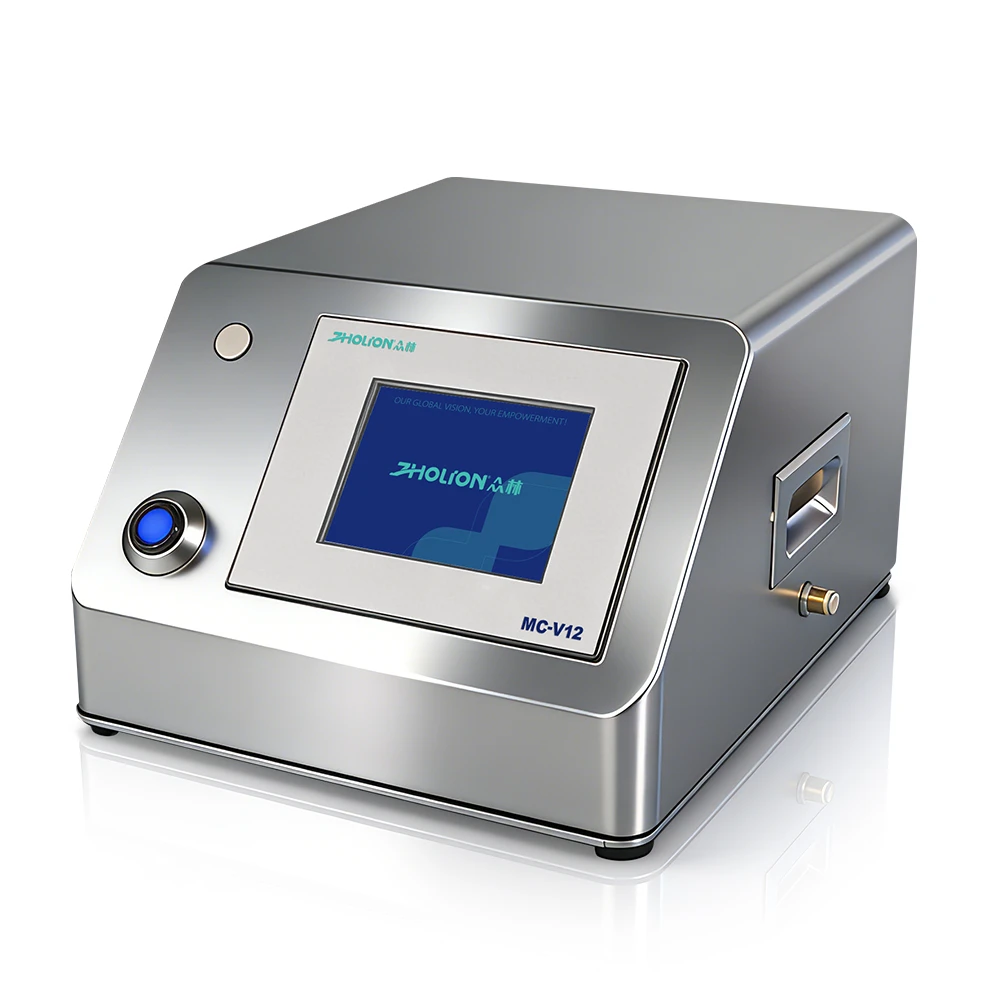
The difference decides whether your next inspection is uneventful. Any leak tester used for batch release, stability or validation work produces electronic GMP records, which brings it under 21 CFR Part 11 and EU GMP Annex 11 whether or not the vendor advertises it. A unit is Part 11 ready when audit trail, access control and record retention are enabled, locked against local editing, and evidenced by documents you can hand an inspector. It is only Part 11 capable when those functions exist in the software but ship disabled or configurable by whoever logs in first. Buy on evidence rather than on the brochure line, and write that evidence into the purchase order before the machine leaves the factory. The requirement attaches to the software layer as much as to the physics, so it applies equally across the instruments Zholion builds, from the MC-V12 vacuum decay leak detector, the automated RC-V12 and the MC-DUO(VP) dual system.
In short: demand a written software conformance statement naming the version, an IQ and OQ package delivered before factory acceptance, and a frozen configuration baseline. Anything a supplier cannot evidence becomes a gap your own quality unit has to close later, usually at greater cost than closing it during the negotiation.
What records does a leak tester actually create?
Most people think about the pass or fail verdict and overlook the rest of the data set.
|
Record the instrument generates |
Control Part 11 and Annex 11 expect |
What an inspector asks to see |
|
Pass or fail verdict per package |
Attributable to one named user, time-stamped, not overwritable |
Individual test results traced to a person, not to a shared login |
|
Raw signal trace, such as pressure against time |
Retained as the original record, not replaced by the derived verdict |
Ability to reconstruct a disputed test months later |
|
Test parameters: setpoint, dwell, threshold |
Version controlled, with old value, new value, actor and reason recorded |
Audit trail extract for one parameter change |
|
Method or recipe file |
Approved before routine use, changes routed through change control |
Approval record for the recipe currently in production |
|
Calibration and system suitability results |
Kept with failures retained, not deleted; traceable to standards |
Certificate plus trend of recent suitability runs |
|
Audit trail itself |
Computer-generated, time-stamped, user-independent, cannot be switched off |
Demonstration that it has always been running |
|
Exported batch report |
Non-editable or electronically authenticated |
The export that went into the batch record |
Two rows catch sites out repeatedly: the raw trace and the parameter change history. An instrument storing only green or red leaves nothing to reconstruct when a result is challenged, and plenty of machines store exactly that.
How do you tell ready from capable during evaluation?
Translate each marketing phrase into something you can test at factory acceptance.
|
What the quotation may say |
What to verify before you sign |
How to verify it |
|
Audit trail included |
No user, including administrators, can disable it |
Have it demonstrated at FAT and ask what happens when logs are cleared |
|
Password protection |
Unique user IDs, no shared accounts, separated roles |
Request the role matrix in writing |
|
Data export available |
Exports are non-editable and keep metadata |
Produce an export at FAT and inspect the file yourself |
|
Meets 21 CFR Part 11 |
The named software version covered by the statement |
Ask for version number and date on the document |
|
Unlimited data storage |
Storage capacity, retention period and a restore procedure that has been tested |
Ask for the storage specification and whether restore validation is included |
The pattern running through every row is the same. A capability becomes a control only once it is configured and evidenced, and a vendor statement quoting a standard without a version number is close to worthless when software changes.
Restrictions and conditions worth stating plainly
Part 11 does not apply with equal weight everywhere, and pretending otherwise wastes money. An instrument used purely for feasibility work outside GMP decision making carries a lighter expectation than one generating batch release data, but a single change of intended use moves it into scope retroactively. A site that keeps paper review and prints results may still have Part 11 obligations for anything retained electronically, so "we review on paper" is not an exemption. The 2025 draft revision of Annex 11 raises the bar further on periodic review, cybersecurity, patch management and data migration at system replacement, so EU-bound buyers should ask how patching is handled and whether historical records can be exported and read after the instrument is retired. And none of this substitutes for method validation: equipment qualification and a compliant audit trail do not, on their own, demonstrate that the method detects your critical leak size. That question belongs to your positive control strategy, not to the software department.
FAQ
Q: Does a standalone benchtop unit fall under Part 11 at all? A: Yes the moment its results support a GMP decision such as release, stability or validation. Physical separation from the network does not remove the obligation, though it does reduce the scope of validation work considerably.
Q: Can we share one operator login for a small team? A: It is a recurring inspection finding and it undermines attribution, which is the first pillar of ALCOA+. Individual accounts cost nothing at specification stage and are disruptive to introduce after qualification.
Q: How long must electronic records be kept? A: Retention follows your own quality system and the marketing authorisation, commonly product shelf life plus one year. Confirm the instrument can hold or export that volume before you buy, rather than discovering the limit at inspection.
Q: Is an electronic signature always required? A: Not always. If review and approval stay on paper and no approval is executed electronically, signed electronic records may not be needed, though edit controls and audit trails still are. Agree the model internally before specifying it.
Q: Can software be upgraded after qualification? A: Yes, but through change control. Ask any supplier to commit in writing to notifying owners of updates affecting validated functions, then assess each one for impact rather than allowing automatic patching.
Q: Does this change which instrument we should buy? A: Sometimes. A manual unit in a development lab may carry a lighter requirement than an automated line-side system writing thousands of records per shift, so specify the software first and let it filter the hardware options. The Zholion leak detector range spans both situations.
Talk to Zholion Before You Write the Instrument Specification
Send your intended use, record types and existing quality procedures to marketing@zholion.com. Zholion will come back with fixture and method recommendations for your package samples, along with the qualification and calibration documents we can supply with each instrument, and we will state in writing which Part 11 elements sit on our side and which your quality unit will need to configure.
Related News
-
Achieving Sub-Micron Leak Detection with Helium Method
Oct. 22, 2026
-
Helium Leak Detection and Its Applications Throughout the Pharmaceutical Product Lifecycle
Oct. 09, 2026
-
Does Passing IQ OQ PQ Mean Your Leak Test Method Stays Valid?
Oct. 09, 2026
-
Vial Integrity Testing vs. CCIT: What's the Difference?
Sep. 28, 2026
Related Products


